

Table of Contents
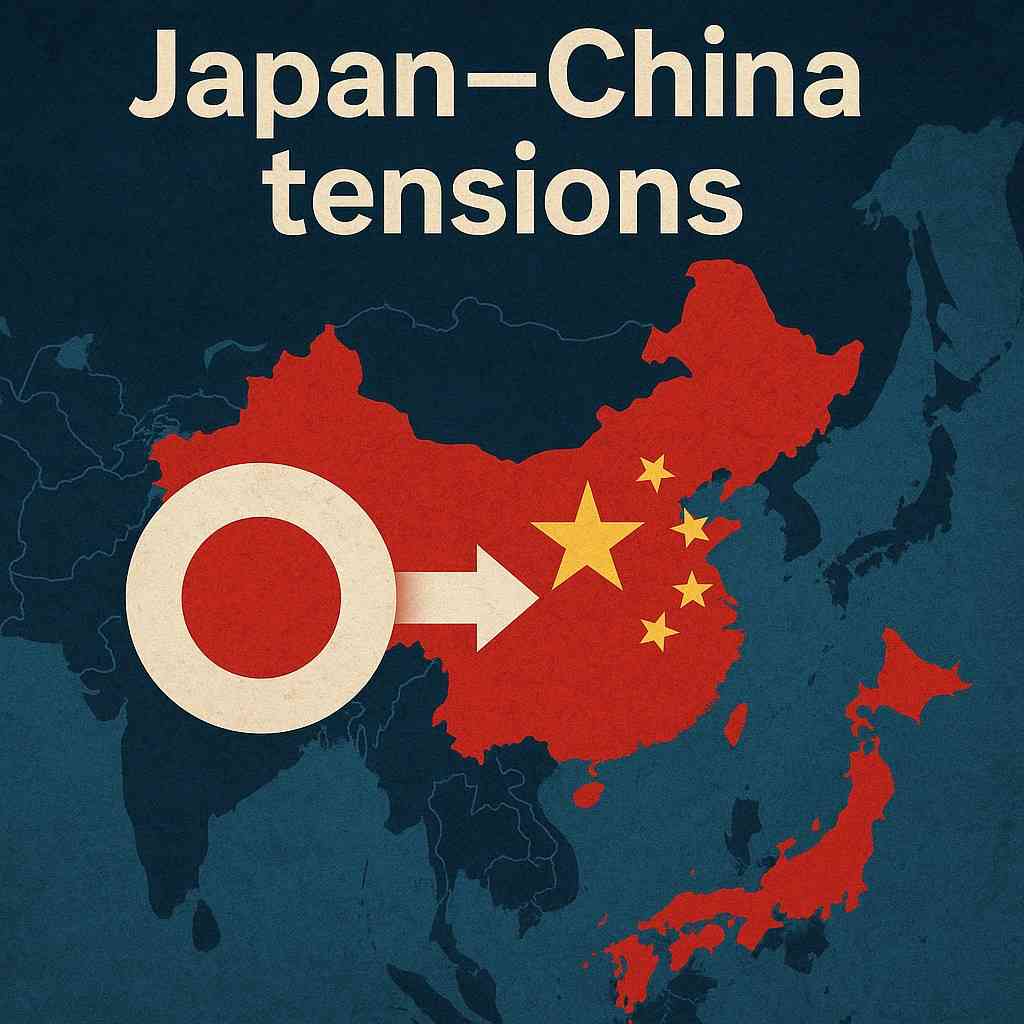
Japan and China just held high-level talks in Beijing, but instead of calming the waters, the meeting came at a moment when tensions are already running hot. The spark? Japanese Prime Minister Sanae Takaichi’s strong comments on Taiwan — a topic Beijing treats as a red line. These remarks have added new strain to an already fragile relationship between Asia’s two major powers. As both nations navigate diplomatic pressure, regional security, and shifting global alliances, the world is watching closely. This latest episode could shape the future of East Asian stability in ways we can’t ignore.
Background: What Triggered the Latest Japan–China Tensions
The latest spark between Japan and China didn’t just appear out of nowhere — it was ignited by Japanese Prime Minister Sanae Takaichi’s recent comments on Taiwan. Her statement, which openly supported Taiwan’s security and hinted at stronger Japanese involvement in the Taiwan issue, hit a nerve in Beijing. China sees Taiwan as a non-negotiable part of its territory, so any foreign leader speaking in its favor feels like a direct challenge.
These remarks came at a time when Tokyo had already been strengthening ties with the U.S. and other Indo-Pacific partners, especially on defense and regional security. Beijing, already wary of Japan’s growing strategic positioning, took the comments as a sign of Japan stepping deeper into what China considers its internal matter.
The tension escalated quickly, leading to a diplomatic chill. Even though senior officials met in Beijing soon after, the atmosphere was already tough. Both sides wanted to keep channels open, but the political mood had shifted. Japan insisted on the importance of peace and stability in the Taiwan Strait, while China demanded that Tokyo stay away from issues it calls “domestic.”
In short, a single statement reopened old wounds — and the region is feeling the ripple.
Why Taiwan Remains the Core Flashpoint Between Tokyo and Beijing
Taiwan isn’t just another diplomatic topic — it’s the pressure point that defines the Japan–China equation. For China, Taiwan is a “core interest,” meaning Beijing sees reunification as a must, not a debate. Any country that even hints at supporting Taiwan instantly lands on China’s radar. So when Japan speaks up about Taiwan’s security, China takes it personally, almost like someone stepping into family matters.
For Japan, the concern is more strategic and practical. Taiwan sits right next to Japan’s southwestern islands, and any instability in the Taiwan Strait directly threatens Japan’s national security, trade routes, and the safety of its own territory. Plus, Japan is closely aligned with the U.S., which openly backs Taiwan — so Tokyo is naturally pulled into the issue.
Another layer? History. Japan once ruled Taiwan, and China hasn’t forgotten. Beijing often views Japan’s involvement through that historical lens, assuming Tokyo’s intentions are political, not protective.
So the clash is built into the geography, the alliances, and the past. Taiwan is the line China doesn’t want crossed, and Japan can’t afford to ignore. That’s why even a single comment on Taiwan can flip the whole region’s mood in seconds.
Inside the Beijing Talks: What Both Sides Discussed
When senior Japanese and Chinese officials sat down in Beijing, the room wasn’t exactly warm vibes and green tea. It was more like both sides trying to keep calm while knowing the spotlight was on every word. The agenda was packed, and the tone was serious from the start.
Japan pushed hard on the need for stability in the Taiwan Strait, repeating that any escalation would directly affect regional peace and Japan’s own security. Tokyo also raised concerns about Chinese military activity near Japanese waters, especially around the Senkaku Islands — another sensitive, long-running dispute.
China, on the other hand, came in firm. Beijing demanded that Japan avoid “interference” in Taiwan, clearly referencing Prime Minister Sanae Takaichi’s recent remarks. Chinese officials emphasized that Taiwan is a domestic matter and warned Japan against aligning too closely with U.S. strategies aimed at containing China.
Beyond the tension points, both sides tried to balance the heat with some diplomacy. They discussed economic cooperation, maintaining communication channels, improving consular coordination, and expanding people-to-people exchanges. Basically, both countries know cutting ties isn’t an option — the region’s economy and stability depend on dialogue.
The meeting didn’t solve anything big, but it kept the conversation alive. And honestly, in this climate, that’s already a win.
Regional and Global Reactions to the Growing Tension
The moment Japan and China started locking horns again, the region didn’t just watch quietly — everyone had something to say, and the reactions showed just how sensitive the Taiwan issue has become. Across Asia, countries like South Korea, Australia, and members of ASEAN kept their statements cautious. Nobody wants to pick sides in a showdown between Asia’s biggest powers, but they all subtly emphasized one thing: stability in the Taiwan Strait is non-negotiable.
The United States, unsurprisingly, backed Japan’s position. Washington has already been strengthening its Indo-Pacific alliances, and Japan is a key partner in that strategy. U.S. officials expressed concern over China’s aggressive posture and quietly appreciated Tokyo for not stepping back under pressure. This, of course, annoyed Beijing even more.
Europe also reacted, though with its usual diplomatic finesse. The EU called for restraint and dialogue, hinting that the global economy can’t afford another geopolitical crisis.
Meanwhile, global markets kept an eye on developments. Any sign of conflict in East Asia instantly raises fears over supply chains, semiconductors, and maritime trade — all of which flow through this region.
In short, the world isn’t just observing; it’s calculating. Because if Japan–China tensions escalate further, the ripple won’t stay limited to Asia.
What This Means for Future Japan–China Relations
Looking ahead, the Japan–China relationship is clearly entering a tougher, more unpredictable phase. PM Sanae Takaichi’s Taiwan remarks didn’t just spark a short-term diplomatic flare-up — they exposed how fragile the foundation between these two powers really is. The trust deficit was already deep, and now the cracks are showing even more.
Japan isn’t likely to tone down its stance on regional security, especially with the U.S. backing its strategic posture. Tokyo knows that any instability in the Taiwan Strait puts its own national security at risk, so it will keep speaking up, no matter how much it annoys Beijing.
China, meanwhile, will continue pushing its red lines. For Beijing, Japan’s involvement in Taiwan is a direct challenge, and it will respond with diplomatic pressure, military signaling, or both. That means more tension in the East China Sea, more sharp exchanges in meetings, and fewer moments of genuine cooperation.
Still, neither country can afford a full breakdown. Their economies are deeply interconnected, and the region’s stability depends on them keeping communication open. So the future likely holds a mix of rivalry, cautious engagement, and constant strategic balancing.
Basically — the relationship isn’t collapsing, but it’s definitely entering its “no-nonsense” era.
https://www.fmprc.gov.cn/mfa_eng
About The Author












Xxx
I really like what you guys tend to be up too.
This type of clever work and coverage! Keep up
the excellent works guys I’ve you guys to our blogroll.