
Table of Contents
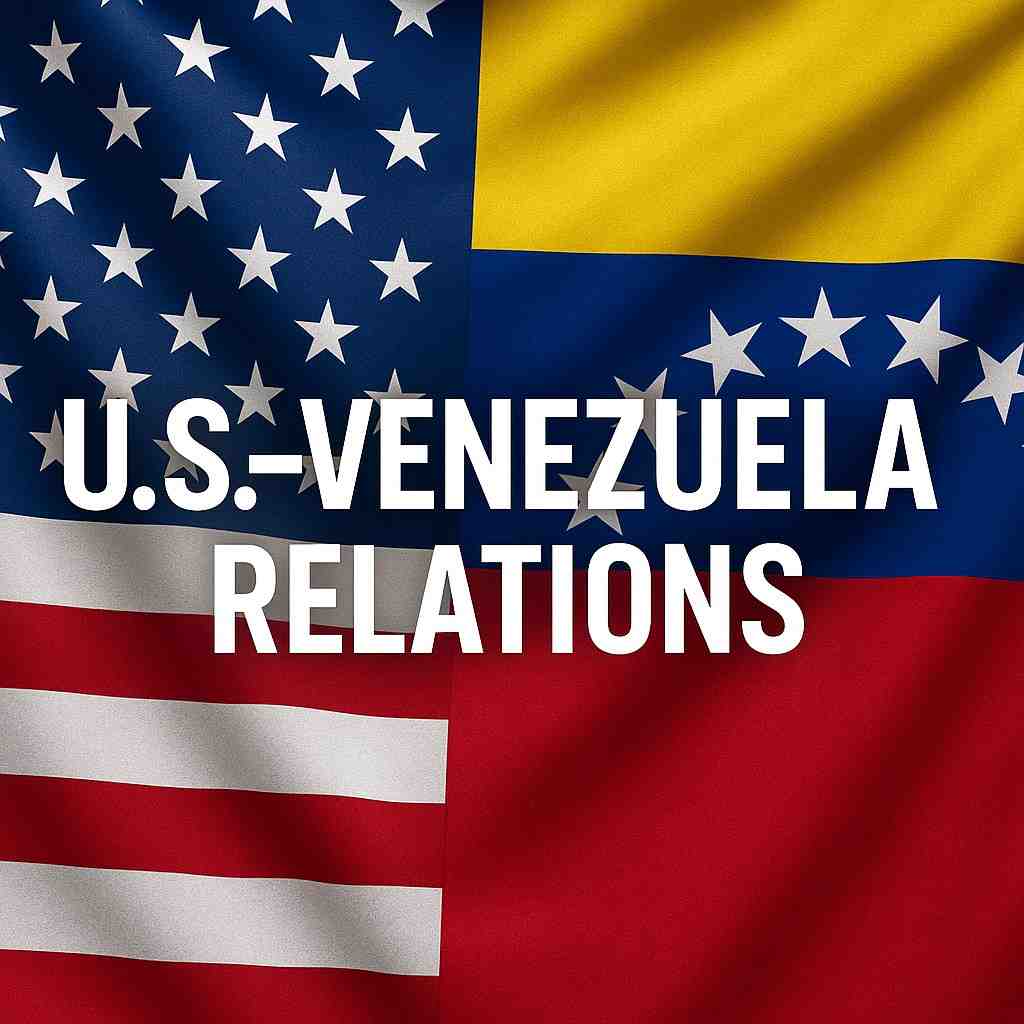
The geopolitical drama between the United States and Venezuela just got a fresh twist. U.S. President Donald Trump has hinted that he is open to direct talks with Venezuelan President Nicolás Maduro, even while keeping the possibility of deploying American troops very much alive. Trump argues that the ongoing migration crisis from Venezuela poses a major security threat to the U.S., making diplomatic engagement unavoidable sooner or later. Meanwhile, Maduro has publicly expressed his willingness for open dialogue, claiming Venezuela remains stable and ready for constructive engagement. This unexpected openness from both sides could redefine the long-strained U.S.–Venezuela relationship.
Why Trump Is Suddenly Open to Dialogue with Maduro
The sudden shift in tone from U.S. President Donald Trump toward Venezuelan President Nicolás Maduro has raised eyebrows across diplomatic circles. For years, Washington’s stance has been crystal clear: Maduro’s government was illegitimate, authoritarian, and a threat to regional stability. Yet Trump’s recent remarks hinting at openness to direct engagement signal that the geopolitical script may be changing — and fast. So, what’s driving this unexpected pivot?
First, the migration crisis has escalated into a full-blown strategic concern for the United States. Millions of Venezuelans have fled economic collapse, food shortages, and political repression. As they continue pouring into neighboring countries and gradually toward the U.S., the issue is no longer just humanitarian — it’s political. Trump has repeatedly emphasized security at America’s borders, and Venezuelan migration gives him another reason to project strength while showing he is willing to negotiate if it secures national interests.
Second, Trump is known for his transactional approach to diplomacy. If talking to adversaries serves American goals, he’s not shy about dialing their number. We saw this with North Korea’s Kim Jong-un and the Taliban in Afghanistan. Engaging with Maduro could be another attempt to reset a stagnant situation where sanctions, pressure campaigns, and international isolation have failed to produce the desired outcome. For Trump, opening the door to talks doesn’t mean backing down — it means exploring an alternative route to get what Washington ultimately wants: stability in Venezuela and reduced external threats.
Third, domestic political calculations always play a role. With rising debates around immigration, foreign involvement, and global security, Trump may see value in portraying himself as a leader willing to try every available option — diplomacy included. It sets him up as both tough and pragmatic, a combination that appeals to parts of his voter base who want results, not endless standoffs.
Fourth, the international landscape is shifting. Global powers like Russia, China, and Iran continue to back Maduro, strengthening his political survival. Sanctions alone haven’t weakened his grip, and the opposition remains fractured. By signaling openness to dialogue, Trump positions the U.S. to reinsert itself into the Venezuelan crisis in a more flexible and strategic manner, possibly preventing rival powers from gaining more influence in the region.
Lastly, Maduro himself seems more receptive to engagement. His recent statements about wanting open dialogue may have encouraged Trump to test the waters. If both sides believe there is room for negotiation — even unofficially — diplomacy becomes a more attractive tool than military pressure alone.
In short, Trump’s openness to dialogue isn’t a random policy twist. It’s a blend of domestic strategy, global power competition, and the urgent need to address the migration crisis. Whether this shift leads to meaningful talks or remains diplomatic posturing, it marks a significant moment in U.S.–Venezuelan relations and sets the stage for what could become one of the most consequential geopolitical conversations of the year.
Maduro’s Call for Direct Talks: A New Diplomatic Maneuver
Venezuelan President Nicolás Maduro’s recent call for direct talks with the United States marks a significant shift in his diplomatic posture — and trust me, it’s not happening randomly. Maduro has long painted Washington as the villain behind Venezuela’s economic collapse, accusing the U.S. of orchestrating sanctions, sabotage, and political interference. But now, he’s signaling openness, even eagerness, to engage in dialogue. So what’s going on behind the curtain? Let’s break it down.
First, Maduro understands that Venezuela’s economic crisis has reached a point where internal fixes aren’t enough. Years of hyperinflation, shortages, and shrinking global partnerships have left the country struggling for stability. While he publicly insists that the nation is “stable,” he privately knows that rebuilding trust with the international community — especially the U.S. — could create opportunities for easing sanctions and boosting economic recovery. Calling for direct talks is Maduro’s way of repositioning himself as a leader willing to negotiate rather than a dictator refusing to budge.
Second, this move allows Maduro to show strength domestically. It’s a smart political play. By publicly offering dialogue, he portrays himself as the mature leader who is open to solutions, while subtly challenging the U.S. to respond in kind. If Washington declines, Maduro can claim the moral high ground within Venezuela: “Look, we tried—they didn’t.” If the U.S. accepts, he gains legitimacy internationally, which is something his government has been desperate for since 2018 when many countries refused to recognize his re-election.
Third, Maduro sees that the international balance of power is shifting—and he wants to stay ahead of the curve. While he enjoys strong relationships with Russia, China, and Iran, he knows relying solely on those allies creates long-term risks. Economic dependence on a few countries limits Venezuela’s strategic freedom. Opening a channel with the U.S. gives Maduro more leverage on the global stage. It signals to his allies that he’s not cornered and to his opponents that Venezuela still has room to maneuver.
Fourth, calling for direct talks helps Maduro control the narrative surrounding Venezuela’s migration crisis. Millions of citizens have fled the country, and the world sees this as evidence of his failed governance. By initiating dialogue, he shifts attention from internal failures to diplomatic efforts. It lets him say, “We’re ready for cooperation — the ball is in Washington’s court.” It’s a tactical effort to soften international criticism and show the world he’s not the obstacle to progress.
Finally, Maduro, like Trump, is a master of political timing. His weekly TV address — where he made these remarks — wasn’t chosen by accident. It was a calculated place to send a message to both Venezuelans and the global community: I’m open to negotiation, and I’m confident enough to say it publicly. By putting the spotlight on cooperation instead of confrontation, Maduro positions himself as a pragmatic statesman rather than an isolated autocrat.
In essence, Maduro’s call for direct talks isn’t just a friendly gesture — it’s a strategic diplomatic maneuver. He’s playing a long game: seeking legitimacy, rebalancing alliances, reducing pressure, and shaping global perception. Whether the U.S. responds positively or not, Maduro has already managed to reshape the narrative in his favor.
The Migration Crisis and U.S. Security Concerns
The migration crisis triggered by Venezuela’s collapse isn’t just a regional issue anymore — it has become a defining challenge for the United States, reshaping foreign policy debates and fueling security concerns in Washington. Millions of Venezuelans have fled their country in search of stability, safety, and basic necessities. And while most settle in Latin American nations like Colombia, Peru, and Brazil, the ripple effect inevitably reaches the U.S. border. This is where the crisis collides directly with America’s political and security landscape.
From the U.S. viewpoint, uncontrolled mass migration creates pressure on border infrastructure, law enforcement, and humanitarian systems. Trump has repeatedly framed this influx as a national security threat, arguing that instability abroad eventually creates instability at home. He sees Venezuelan migration not only as a humanitarian fallout but also as a potential gateway for criminal organizations, drug traffickers, and other non-state actors to exploit the chaos. Whether this threat is overstated or not, it undeniably shapes Washington’s approach.
The situation is further complicated by the sheer scale of displacement. Venezuela has produced one of the largest migration crises in modern history, comparable to the Syrian refugee wave. Such massive movement of people stresses regional resources, weakens neighboring economies, and reshapes demographic trends — all of which indirectly influence U.S. interests. When entire regions struggle under economic pressure, instability spreads faster, making the U.S. more eager to intervene diplomatically or enforce tighter border control.
Another factor is political pressure at home. Immigration has become a hot-button issue in American politics, and Venezuelan migration provides yet another flashpoint. Trump’s base wants firm action at the border, and highlighting Venezuelan migration fits neatly into his larger narrative of protecting American security. For him, framing the crisis as a threat enables him to justify everything from diplomatic engagement to military readiness. It’s both policy and politics intertwined.
But beyond political rhetoric, there are genuine security concerns. U.S. intelligence agencies have warned of criminal networks taking advantage of mass displacement to expand operations. The collapse of Venezuela’s economy has led to the rise of illegal mining groups, armed militias, and smuggling networks. These actors don’t recognize borders — they move where opportunity exists. As Venezuelans migrate north, these shadow groups may attempt to blend in, making border enforcement more complex.
There’s also the strategic dimension. The U.S. can’t ignore that Venezuela is deeply connected to U.S. rivals like Russia, China, and Iran. As millions flee and the state weakens, adversarial influence grows stronger. Washington sees the migration crisis as part of a bigger geopolitical puzzle. Addressing it isn’t just about humanitarian aid — it’s about preventing foreign powers from gaining deeper footholds in the Western Hemisphere.
In short, the Venezuelan migration crisis has evolved into a multilayered challenge for the U.S. It touches domestic politics, border security, intelligence assessments, and long-term geopolitical strategy. For Trump, engaging with Maduro — or keeping military options open — becomes a way to manage the crisis from multiple angles. The movement of people is no longer just a humanitarian tale; it’s a driving force behind Washington’s recalibrated approach to Venezuela.
Military Option Still “On the Table”: What It Really Means
Whenever a U.S. president says the “military option is still on the table,” people immediately imagine tanks rolling in and airstrikes lighting up the sky. But in reality, that phrase is usually more about pressure than action — and Trump knows exactly how to use it. His decision to keep the military option alive in the Venezuela debate isn’t just loud rhetoric; it’s a strategic signal aimed at multiple audiences at the same time.
First, it’s classic American geopolitical messaging. Keeping military action as a possibility forces Maduro’s government to take U.S. warnings seriously. Washington has already used sanctions, diplomatic isolation, and political pressure, but these tools haven’t toppled Maduro or weakened his grip significantly. So, by saying the military card is still available, Trump adds another layer of psychological leverage. Maduro may not fear sanctions anymore, but the idea of U.S. troops at his doorstep? That still hits differently.
Second, this stance reassures U.S. allies in the region. Countries like Colombia and Brazil are directly affected by Venezuelan instability. They’re dealing with migration, border violence, and economic stress. When Trump signals military readiness, he’s also telling America’s partners, “We’ve got your back if things get out of control.” It’s less about launching an invasion and more about showing that Washington isn’t checking out of the crisis.
Third, the military option plays extremely well in domestic politics. Trump’s supporters value decisive leadership and strong national security positions. By keeping all options open, he presents himself as a leader who won’t be “soft” on authoritarian regimes or threats near U.S. borders. Even if he never intends to pull the trigger, saying he might is enough to send a message to his base that he’s on top of things.
Fourth, the phrase helps Trump negotiate from a position of strength. It’s a common tactic: show your opponent that you’re willing to escalate, and they’re more likely to compromise. If Maduro wants diplomatic talks — and he says he does — then reminding him of possible U.S. military involvement sets the tone. It signals that Washington won’t approach discussions as a weak party desperate for engagement. Instead, it’s more like: “We’re open to talks, but don’t mistake that for weakness.”
But here’s the important reality: a U.S. military intervention in Venezuela would come with massive risks. Logistically, it would be complex. Politically, it would be controversial. Regionally, it could spark instability far worse than the current crisis. And globally, it would create tensions with Russia and China, who are heavily invested in Maduro’s survival. That’s why many analysts believe Trump’s “military option” language is more bark than bite. It’s meant to influence behavior, not start a war.
In the end, Trump keeping the military option alive is about maintaining pressure, shaping negotiations, and signaling strength — not preparing for invasion. It’s a strategic tool, not a concrete plan. And whether Maduro likes it or not, the U.S. will keep using that pressure point as long as the crisis shows no signs of calming down.
The Future of U.S.–Venezuela Relations: Cooperation or Confrontation?
The future of U.S.–Venezuela relations is standing at a weird crossroads right now — a mix of cautious optimism, unpredictable politics, and straight-up geopolitical tension. With both Donald Trump and Nicolás Maduro sending surprisingly open signals for dialogue, the big question is whether these two nations are heading toward cooperation or gearing up for another chapter of confrontation. And honestly? It could go either way.
Let’s start with the hopeful side. If both leaders actually commit to talking, diplomacy could finally break the deadlock that has defined their relationship for years. The U.S. wants to slow the migration crisis, reduce the influence of rival powers in the region, and bring some stability to its own southern sphere. Venezuela, on the other hand, desperately wants relief from crushing sanctions, economic breathing room, and international legitimacy. So there is a visible overlap in interests — a rare thing in this long, messy political feud. Cooperation would benefit both sides, even if neither wants to fully admit it.
But here comes the catch: both governments also thrive on confrontation. For Trump, tough talk against regimes like Maduro’s has always been part of his political brand. For Maduro, portraying the U.S. as an imperialist enemy has helped him maintain domestic control. These narratives are powerful, and they’ve shaped the mindset of their supporters for years. Giving that up won’t be easy. Even if talks happen, tension will remain baked into the relationship.
Another big factor is the role of outside powers. Venezuela isn’t isolated — it’s deeply linked with China, Russia, Iran, and even Turkey. These countries have invested money, military agreements, and political loyalty into Maduro’s survival. If the U.S. tries to get too involved, these powers could push back, complicating any attempt at genuine reconciliation. At the same time, Washington won’t just step aside and let rival nations strengthen their grip in the Western Hemisphere. So geopolitics will continue shaping every move the U.S. makes in Venezuela.
The internal situation in Venezuela also matters. Economic collapse, corruption, and political repression have weakened the country from within. Even if talks happen, rebuilding trust and stability will take years. The U.S. might be hesitant to cooperate fully unless Venezuela shows real commitment to reforms — something Maduro has rarely delivered.
Still, there’s a real chance the two sides could find a middle path. Not full-fledged friendship, not open conflict — but a tense, practical coexistence. Maybe sanctions ease slightly. Maybe migration agreements are signed. Maybe intelligence cooperation increases quietly behind the scenes. These small steps won’t solve everything, but they could prevent the relationship from spiraling into crisis again.
So, what does the future look like? In simple terms: a fragile balance. Cooperation is possible, but confrontation is always one misstep away. The next few months — whether talks actually happen, and how both leaders handle them — will decide whether U.S.–Venezuela relations move toward stability or slip back into hostility.
1. U.S. Department of State – Venezuela Policy
2. United Nations – Venezuela Migration Data
3. Organization of American States (OAS) – Reports on Venezuela
4. BBC News – U.S.–Venezuela Relations Coverage
About The Author







Leave a Reply