

Table of Contents
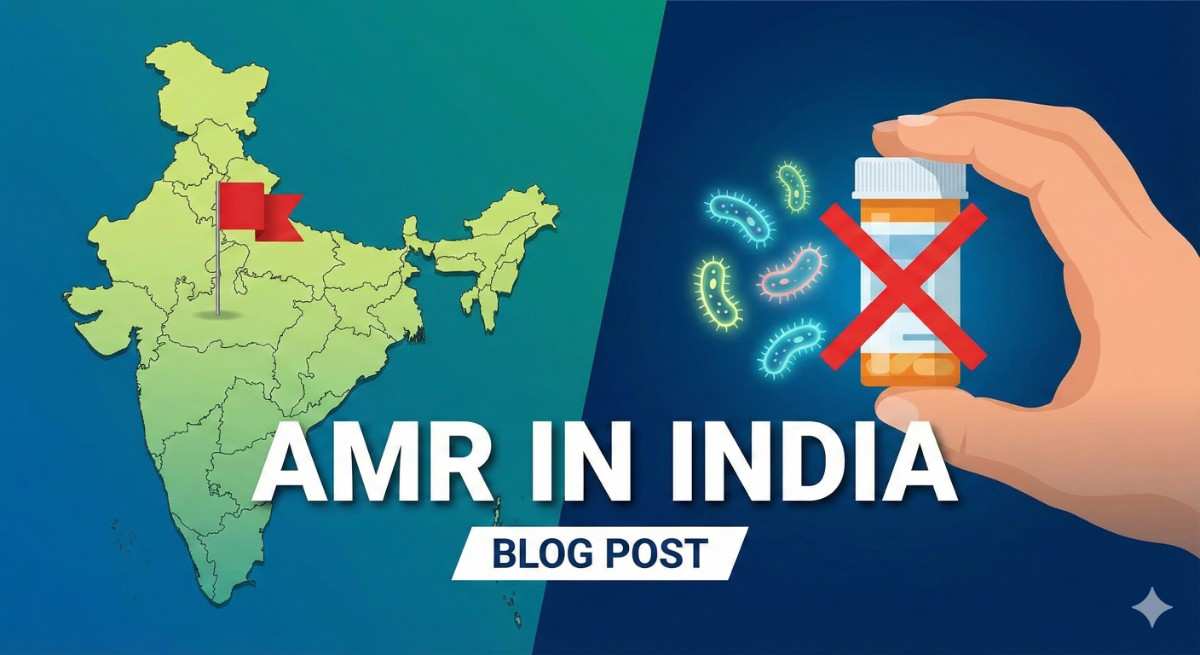
Antimicrobial Resistance in India has rapidly evolved into one of the country’s most urgent public health challenges. With rising misuse of antibiotics, overwhelmed hospitals, and widespread environmental contamination, India now stands at the epicenter of a global AMR crisis. Resistant infections are making common diseases harder to treat, increasing healthcare costs, and threatening the future of routine medical procedures. As the country pushes for stronger healthcare systems and scientific innovation, understanding AMR and controlling its spread has become critical. This blog explains the causes, dangers, government actions, and solutions needed to protect India’s health future.
Understanding Antimicrobial Resistance: How It Works and Why It Matters
Antimicrobial Resistance (AMR) sounds like a heavy scientific concept, but at its core, it simply describes a natural survival trick used by microbes — bacteria, viruses, parasites, and fungi — to outsmart the medicines designed to kill them. And trust me, microbes aren’t playing around. Whenever antibiotics or other antimicrobial drugs are misused, underused, or overused, these tiny organisms evolve. They mutate, reorganize, and build defense systems that make our strongest medicines look weak. This process becomes a dangerous cycle: the more we misuse drugs, the smarter these microbes get.
Here’s the real plot twist — AMR is not a future problem. It’s already here. India is one of the world’s AMR hotspots, with some of the highest antibiotic consumption rates globally. According to the Indian Council of Medical Research (ICMR) 2023 AMR Surveillance Report, common bacteria such as E. coli, Klebsiella pneumoniae, and Staphylococcus aureus are showing rising resistance to frontline antibiotics. This means diseases that were once easily treatable are now becoming stubborn, long-lasting, and far more expensive to cure.
To understand how AMR works, imagine this: you’re taking antibiotics for an infection. If you stop the course midway because you “feel better,” some bacteria survive. These survivors then learn how to resist the same drug in the future. They multiply, spread, and eventually pass on this resistance power to other microbes. Over time, entire bacterial communities become immune to medicines that used to wipe them out in hours.
AMR also spreads through food, water, animals, and even the environment. India’s overuse of antibiotics in livestock, contaminated hospital wastewater, and poor sanitation systems create the perfect breeding ground for resistant bacteria. Add to that our massive population, overcrowded hospitals, and self-medication culture, and you’ll see why the AMR fire is spreading faster here than in many other countries.
Now, why does AMR matter so much? Simple — it threatens the entire foundation of modern medicine. Without effective antibiotics, routine treatments like C-sections, dialysis, cancer chemotherapy, and even dental surgeries become high-risk. According to The Lancet 2024 estimates, AMR could cause over 10 million deaths per year globally by 2050, with India carrying a huge burden if drastic steps aren’t taken. The economic impact is just as brutal — prolonged hospital stays, expensive last-line drugs, and higher mortality could cost India billions in healthcare expenditure.
Worst part? We can’t just “invent new antibiotics” overnight. The development cycle takes 10–15 years, costs hundreds of millions of dollars, and major pharmaceutical companies aren’t investing heavily because antibiotics don’t generate long-term profit. So protecting the antibiotics we already have is our best shot.
Understanding AMR is the first step toward fighting it. And India, with its massive population and rapidly evolving healthcare needs, must take this threat seriously. If we don’t act now, we risk entering a “post-antibiotic era,” where minor infections turn deadly again. And honestly, that’s one rewind nobody wants.
The Hidden Drivers Behind India’s Rapidly Escalating AMR Challenge
Antimicrobial Resistance in India didn’t just appear out of nowhere — it has been brewing for years, fueled by a mix of human behavior, healthcare gaps, economic pressures, and environmental negligence. The scary part? Most of these drivers operate quietly in the background, and by the time we notice, resistant infections have already spread. Let’s break down the hidden culprits intensifying India’s AMR crisis.
1. Overuse & Misuse of Antibiotics — The Biggest Offender
India is officially one of the highest consumers of antibiotics in the world. According to a 2024 WHO estimate, India accounts for over 10% of global antibiotic consumption. Self-medication is basically a national habit — people walk into medical shops, grab antibiotics without prescriptions, and take them “just to recover faster,” even when it’s a viral infection. Viral infections don’t even need antibiotics, but our misuse gives bacteria unnecessary exposure, which boosts resistance. Doctors also sometimes prescribe antibiotics “just to be safe,” especially in overcrowded clinics where diagnostic testing isn’t feasible.
2. Weak Regulation of Pharmacies
Let’s be honest — India’s antibiotic access is TOO easy. A huge percentage of pharmacies still sell Schedule H antibiotics without proper prescriptions. Even last-line drugs, meant only for critical care, sometimes leak into general markets. Poor regulation means people can access antibiotics like candy, creating the perfect setup for resistance.
3. Poor Infection Prevention & Control in Hospitals
Hospitals are supposed to be safe, but many end up as AMR hotspots. Overcrowded wards, limited staff, unhygienic equipment, and poor sanitation allow resistant bacteria to jump from patient to patient. The ICMR AMRSN 2023 report found alarmingly high resistance in ICU patients, especially against drugs like carbapenems — indicating hospital-acquired infections are a key driver.
4. Antibiotic Overuse in Agriculture & Animal Farming
India’s poultry and livestock farms routinely use antibiotics, not just for treating sick animals but also to promote faster growth. These antibiotics seep into meat, eggs, milk, and eventually humans. Contaminated animal waste enters soil and water, spreading resistant bacteria into the environment. The result? Even people who have never misused antibiotics end up exposed to resistance.
5. Environmental Contamination — The Silent Super-Spreader
India’s pharmaceutical industry is massive, but untreated effluents from drug factories often flow into rivers. This releases antibiotic residues directly into the environment, giving bacteria a continuous supply to evolve resistance. Hospital wastewater is another danger — filled with concentrated antibiotics and resistant microbes. When this untreated waste mixes with public water sources, the spread becomes unstoppable.
6. Lack of Awareness and Delayed Diagnostics
Most people don’t know what AMR actually is. They think antibiotics are universal “heat-reducing” medicines. And when diagnostics take too long or cost too much, doctors often prescribe broad-spectrum antibiotics even without confirmation. Every unnecessary prescription accelerates AMR.
7. Socioeconomic & Lifestyle Factors
High population density, poor sanitation in many regions, and widespread consumption of street food exposed to contamination — all these factors create easy paths for resistant microbes to travel.
India’s AMR crisis isn’t just a medical issue — it’s a system-wide challenge driven by human habits, weak governance, environmental neglect, and economic shortcuts. Until these hidden drivers are addressed, AMR will grow faster than our efforts to control it.
Why Antimicrobial Resistance is Emerging as a Major Threat to India’s Future
Antimicrobial Resistance (AMR) isn’t just another medical challenge — it’s one of those “if we don’t fix this NOW, we’ll pay for it BIG TIME” problems. For India, the threat is even sharper. With a massive population, rising disease burden, and overstressed healthcare infrastructure, AMR is shaping up to be a direct attack on the country’s public health, economy, and long-term national development. The danger is real, growing fast, and honestly, way under-discussed for how big the stakes truly are.
1. Treatable Diseases Are Becoming Harder — and Sometimes Impossible — to Cure
AMR is making common infections like UTIs, pneumonia, typhoid, tuberculosis, and even skin infections resistant to multiple antibiotics. According to ICMR 2024, resistance to key drugs like carbapenems, cephalosporins, and fluoroquinolones has been rising consistently. India already carries the world’s largest burden of drug-resistant TB — and if AMR continues increasing at this pace, routine infections could turn into deadly episodes. Imagine going back to an era where scratches caused fatal infections. That’s the direction AMR pushes us into.
2. Healthcare Costs Will Skyrocket
Resistant infections need longer hospital stays, stronger antibiotics, ICU care, and repeated diagnostics — all of which inflate medical bills. India’s out-of-pocket health expenditure is already 52.2% (NHA 2024). AMR pushes families deeper into debt, increasing poverty and inequality. Last-line antibiotics are extremely expensive, and when even they fail, the treatment options shrink fast. For a country where millions rely on low-cost care, AMR becomes an economic nightmare.
3. Medical Procedures Will Become Riskier
Modern medicine depends on antibiotics. Think surgeries, chemotherapy, dialysis, caesarean deliveries, organ transplants — all require infection control. If antibiotics stop working:
- C-sections become life-threatening
- Chemotherapy patients face uncontrollable infections
- Minor surgeries turn deadly
- ICU mortality increases massively
Basically, AMR threatens the entire foundation on which modern healthcare stands.
4. Economic Losses Will Hurt India’s Growth Story
AMR isn’t just a health issue; it’s a major economic threat. A joint World Bank–WHO model (2024) suggests that AMR could push up to 24 million people into extreme poverty globally by 2030, with India among the worst-hit. Productivity drops when more people fall sick, stay sick longer, or die young. Healthcare spending spikes. Workforce efficiency dips. Together, these factors can drag down GDP growth, hitting India’s development goals.
5. India’s Agriculture & Food Safety Are at Risk
Antibiotic-resistant bacteria in poultry, livestock, and aquaculture are entering the food chain. If the trend continues, India’s food exports, especially meat and seafood, could face international restrictions. Domestic consumers also risk exposure to drug-resistant bacteria through contaminated food and water. Future food security gets jeopardized too.
6. The Threat to National Health Security
AMR spreads across borders through travel, trade, and migration. A resistant infection emerging in one city can reach the entire country in weeks. For a nation as mobile and dense as India, AMR represents a national security concern, not just a public health issue.
AMR is more than just a scientific problem — it’s a threat woven into the future of India’s health, economy, safety, and development. If ignored, it could undo decades of medical progress and destabilize the country’s long-term growth path. The warning signs are clear, loud, and urgent — and India cannot afford to look away.
How India is Responding: Government Strategies and National Action Plans on AMR
India knows it’s staring at a massive AMR crisis — and thankfully, the government isn’t sitting idle. Over the past few years, India has built one of the most structured, multi-sectoral AMR frameworks among developing nations. From national action plans to surveillance networks, regulation reforms, and One Health initiatives, the country has taken several high-impact steps. But are these efforts enough? Let’s unpack what’s being done, what’s working, and where the gaps remain.
1. The National Action Plan on AMR (NAP-AMR) — India’s Core Blueprint
Launched in 2017, the NAP-AMR is India’s primary strategy to combat resistance. Built on the WHO Global Action Plan, it has six major pillars:
- Awareness and education
- Strengthening surveillance
- Reducing infection
- Optimizing antimicrobial use in health and animals
- Promoting research and innovation
- Strengthening leadership and partnerships
Ever since its rollout, states like Kerala, Madhya Pradesh, Delhi, and Karnataka have prepared their State Action Plans to implement AMR policies at ground level — a big win for decentralization.
2. ICMR’s Antimicrobial Resistance Surveillance Network (AMRSN)
The Indian Council of Medical Research has set up one of the largest AMR surveillance systems in Asia.
- Established in 2013, expanded significantly by 2024
- Covers over 30+ laboratories and medical colleges
- Tracks AMR patterns in E. coli, Klebsiella, Staphylococcus aureus, Pseudomonas, and more
The AMRSN Report 2023–24 highlighted rising resistance to key antibiotics — a wake-up call that is shaping new policies on antibiotic stewardship and hospital infection control.
3. National Programme on AMR Containment (NCDC)
The National Centre for Disease Control runs an integrated AMR containment program focusing on:
- Surveillance across states
- Laboratory strengthening
- Training healthcare workers
- Promoting rational antibiotic use
NCDC also pushes Infection Prevention and Control (IPC) guidelines across hospitals, especially government facilities.
4. Strengthening Regulations on Antibiotic Use
India has tightened its regulatory framework through:
- Schedule H1: Restricting sales of critical antibiotics
- Ban on Colistin in Food Animals (2019) — a major step applauded globally
- Draft policies to reduce antibiotic misuse in agriculture, aquaculture, and veterinary sectors
These regulatory measures target easy access and misuse — two of India’s biggest AMR drivers.
5. One Health Approach — Human, Animal, and Environment Together
AMR isn’t a “hospital-only” issue, and India knows that. The government has launched cross-ministerial action involving:
- Ministry of Health
- Ministry of Fisheries, Animal Husbandry & Dairying
- Ministry of Environment
- Ministry of Agriculture
- Drug regulatory agencies
Projects like the FAO–India One Health AMR initiative (2022–2025) are improving surveillance in animals, food systems, and the environment.
6. Hospital Antimicrobial Stewardship Programs (AMSPs)
ICMR has mandated AMSPs in major hospitals to ensure:
- Safer antibiotic prescribing
- Audit and feedback practices
- Restricted use of last-line antibiotics
- Rapid diagnostics to reduce unnecessary prescriptions
Institutes like AIIMS, PGIMER, JIPMER, and state medical colleges are adopting these programs nationwide.
7. Research & Innovation Push
India has increased support for:
- New antibiotics research
- Rapid diagnostics
- Alternatives to antibiotics
- Environmental AMR studies
The DBT–ICMR joint initiatives are funding AMR research clusters across universities and biotech startups.
India’s AMR strategy is multi-layered, ambitious, and constantly evolving. But while the government is pushing hard, the challenge is massive — and achieving real impact will require strict implementation, funding, and public cooperation. The framework exists; now it needs on-ground speed and discipline.
Strengthening India’s Defence: What More Can Be Done to Combat AMR Effectively?
India has built a strong foundation to tackle Antimicrobial Resistance, but let’s be real — the fire is spreading faster than the firefighting. If India wants to avoid a post-antibiotic nightmare, the next steps need to be bold, aggressive, and backed by strict implementation. AMR isn’t just a health-sector problem; it’s a national challenge that demands a whole-of-society response. Here’s what India MUST do next to strengthen its defence and turn the tide.
1. Make Antibiotic Stewardship Mandatory in ALL Healthcare Facilities
Right now, only major hospitals follow stewardship policies — but AMR doesn’t care whether someone got infected in AIIMS or a small clinic in a Tier-3 town.
India needs to:
- Enforce nationwide AMSP (Antimicrobial Stewardship Programs)
- Mandate prescription audits in every hospital
- Introduce penalty-based systems for irrational prescribing
- Train doctors, nurses, and pharmacists regularly
This is the fastest way to reduce unnecessary antibiotic use — the biggest AMR driver.
2. Bring Real-Time Diagnostics to the Masses
Doctors often prescribe broad-spectrum antibiotics because diagnostics take days. India needs to deploy rapid, affordable diagnostic tools everywhere.
The government can:
- Subsidize point-of-care diagnostics
- Support startups building AI-driven testing kits
- Enable public–private partnerships for nationwide diagnostic access
The faster we identify the right infection, the fewer antibiotics we misuse.
3. Strengthen Regulations on Pharmacy Sales — For Real This Time
Let’s be honest: “No antibiotic without prescription” is printed everywhere yet followed almost nowhere. India must enforce strict rules:
- Crack down on non-registered pharmacies
- Digitalize antibiotic sales with e-prescription systems
- Ban over-the-counter sales of high-risk antibiotics
- Empower state drug controllers with more workforce & tech tools
Technology-driven tracking is the only way to stop antibiotic leakage.
4. Clean Up the Environment — Especially Pharmaceutical & Hospital Wastewater
India’s rivers shouldn’t be swimming in antibiotic residues. The government should:
- Mandate Zero Liquid Discharge (ZLD) for pharma companies
- Monitor effluents using real-time sensors
- Penalize untreated hospital wastewater release
- Improve municipal sewage treatment
Environmental AMR is a silent super-spreader — tightening this one area alone could massively reduce resistance.
5. Transform Antibiotic Use in Animals & Agriculture
Grow-fast antibiotics in poultry and livestock need to go. Completely.
India should:
- Ban all non-therapeutic antibiotic use in farms
- Promote vaccination & biosecurity in livestock
- Implement AMR surveillance in food chains
- Encourage antibiotic-free certified farming
Healthier animals = safer humans.
6. Massive Public Awareness Campaigns — AMR Should Be Mainstream Knowledge
People treat antibiotics like fever tablets. Awareness is everything.
What India needs:
- AMR content in school textbooks
- National TV & digital campaigns
- Local-language awareness drives
- Clear labeling on medicines about AMR risks
Changing public behavior is the secret weapon.
7. Invest More in Research, New Antibiotics & Alternatives
India should push for:
- New antibiotic discovery grants
- Phage therapy research
- AI-based drug development
- Vaccines targeting high-AMR bacteria
- AMR-focused biotech startups
India has the talent — it just needs the funding.
8. Create a Central AMR Command Centre
A dedicated national agency — like a “National AMR Authority” — could coordinate all ministries, states, research institutions, and hospitals.
Think of it as India’s “AMR war room” tracking real-time resistance trends and guiding policy.
India’s fight against AMR will define its medical future. With smarter policies, stricter regulation, better public awareness, and strong investment in science, India can absolutely turn this crisis around. But the urgency is now. AMR isn’t waiting — and neither should we.
Conclusion: Building a Resilient, AMR-Ready India
Antimicrobial Resistance is not some distant “science problem” — it’s a real-time crisis unfolding across India’s hospitals, farms, pharmacies, and even rivers. And the truth is simple: if India doesn’t strengthen its defences now, the country risks stepping into an era where minor infections turn deadly, surgeries become high-risk, and the entire healthcare system feels the heat. But the good news? India already has the building blocks needed to win this battle — they just need sharper execution, stronger enforcement, and full public participation.
India’s future depends on a three-layered strategy: prevention, regulation, and innovation. Prevention through nationwide awareness, hygiene, infection control, and responsible antibiotic use. Regulation through strict pharmacy laws, monitoring antibiotic sales, cleaning up pharmaceutical waste, and eliminating misuse in animals and agriculture. And innovation through cutting-edge diagnostics, new drug discovery, and game-changing research in vaccines and phage therapy. This is how modern nations build AMR resilience — and India has the capability to lead globally.
The fight ahead isn’t just the government’s responsibility. Doctors, pharmacists, farmers, hospitals, industries, and everyday citizens all play a defining role. A single unnecessary antibiotic, a single untreated waste drain, or a single neglected infection — each can contribute to resistance. But similarly, each informed decision helps slow down the crisis.
India’s AMR journey will determine the safety of future surgeries, childbirths, and even routine healthcare. With strong political will, smarter public habits, and investment in science, India can shift from being an AMR hotspot to becoming a global model of resistance control. The path is long, but the direction is clear: a cleaner environment, a disciplined health system, and a future where antibiotics continue saving lives — not losing battles.
The clock is ticking, but India can still win. And honestly? This is one fight where giving up isn’t an option.
About The Author










Leave a Reply