

Table of Contents
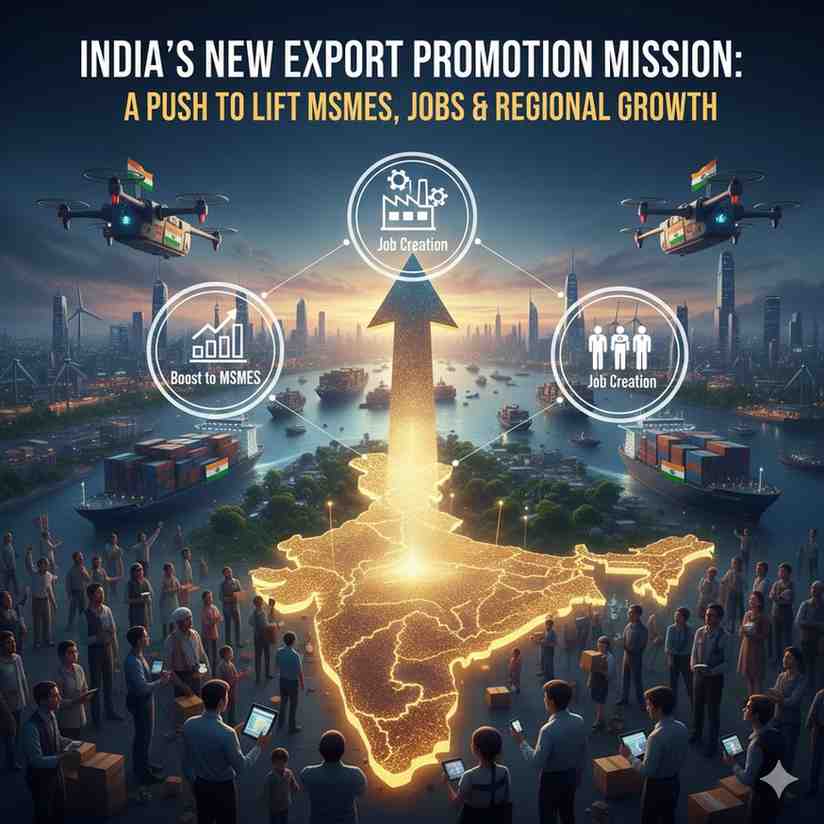
India is gearing up for a major boost in global trade with the launch of the Export Promotion Mission (EPM), recently approved by the Government of India. This mission aims to supercharge the country’s export ecosystem, focusing especially on MSMEs, labour-intensive industries, and regions that have traditionally stayed on the margins of global commerce. By tackling long-standing bottlenecks, improving market access, and strengthening export competitiveness, the EPM hopes to position India as a reliable global supplier in key sectors. With coordinated efforts across ministries and states, the initiative signals a fresh, forward-looking strategy to expand India’s export footprint.
What is the Export Promotion Mission (EPM)?
The Export Promotion Mission (EPM) is India’s latest big push to fix its export ecosystem—especially for MSMEs and labour-intensive sectors that have historically struggled to scale globally. Announced in the Union Budget 2025–26, the EPM finally does what businesses have been asking for: merging dozens of scattered, slow, and overlapping export-support schemes into one unified, digitally enabled framework. With a sizeable ₹25,060-crore outlay spread from FY 2025–26 to FY 2030–31, the mission aims to make India’s exporters more competitive, more resilient, and way more future-ready.
At the core of EPM is a strongly coordinated institutional setup. The Department of Commerce leads the charge, but it isn’t working in a silo. Ministries like MSME and Finance, along with Export Promotion Councils, Commodity Boards, financial institutions, industry bodies and state governments, are all plugged in. This whole-of-government structure is meant to ensure that exporters don’t get lost in paperwork or conflicting rules. The Directorate General of Foreign Trade (DGFT) acts as the primary implementing agency and the tech backbone behind the mission.
To deliver targeted support, the EPM operates through two integrated sub-schemes—Niryat Protsahan and Niryat Disha.
Niryat Protsahan focuses on the money side of exporting. MSMEs often choke at the finance stage—costly credit, high collateral demands, and delays in payments. This sub-scheme offers affordable trade finance, interest subvention, factoring, exporter credit cards, collateral support and credit enhancement tools. The idea is simple: if MSMEs can breathe financially, they can compete globally.
Niryat Disha takes care of the non-financial barriers. Indian exporters frequently stumble on quality certification, global standards, branding, logistics, and access to international buyers. This sub-scheme provides support for upgrading quality and compliance systems, participating in global trade fairs, improving branding and packaging, and strengthening logistics linkages. It also invests heavily at the district level, focusing on first-time exporters and low-export-intensity regions to expand India’s export base beyond big cities and coastal hubs.
One of the strongest aspects of EPM is its digital implementation model. A single DGFT-run portal enables integrated, paperless processing of applications, benefits, grievance redressal, and monitoring. The outcome-based design ensures real-time data, transparency, and the ability to quickly adjust policy when global trade winds shift—which, let’s be honest, happens more often than anyone likes.
The mission also shows a sharp sectoral focus. High-tariff, high-potential sectors such as textiles, leather, gems & jewellery, engineering goods and marine products receive priority support. These industries employ millions of workers, especially women, and hold significant export potential if supported correctly. Meanwhile, first-time exporters, MSME clusters, and labour-intensive supply chains get special attention to boost inclusivity.
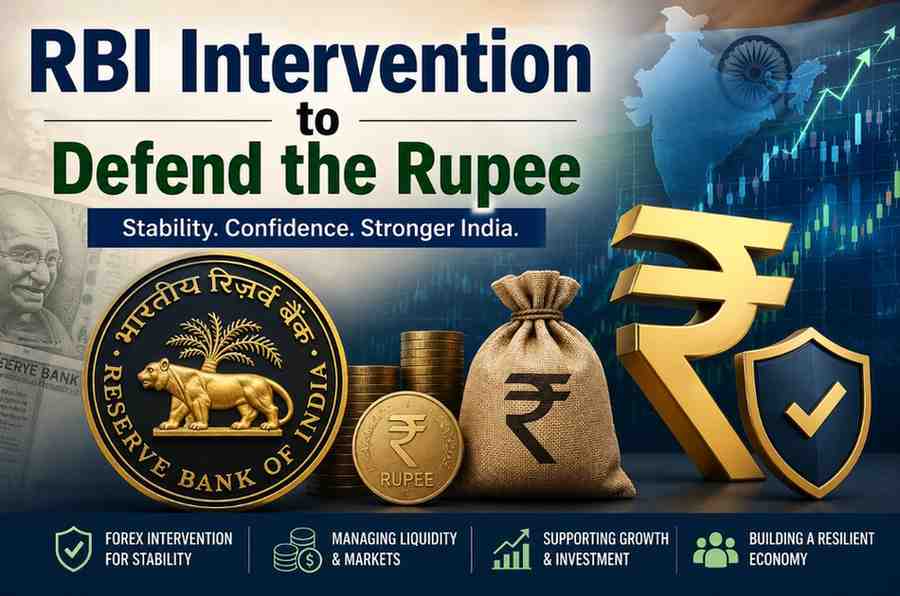
Importantly, the Reserve Bank of India’s Trade Relief Measures 2025 complement the EPM by easing liquidity stress and improving access to export finance—creating a smoother financial environment for businesses looking to scale up.
If implemented effectively, the EPM can deliver major outcomes: stronger trade finance ecosystems, higher compliance and certification capability, better global visibility for Indian brands, and increased exports from non-traditional districts. Together, these steps push India toward an export-led growth model aligned with Atmanirbhar Bharat and the long-term vision of Viksit Bharat @ 2047—making India not just a participant but a serious contender in global trade.
What is the Status of India’s Export Industry?
India’s export sector is not just holding steady—it’s evolving, expanding, and finally stepping into a more sophisticated global role. In 2023–24, India hit an all-time export high of USD 778.21 billion, a massive 67% jump compared to 2013–14. And no, this isn’t just a lucky spike or a couple of good quarters. It reflects deeper structural shifts—stronger manufacturing capacity, a more digital and tech-enabled business ecosystem, and a conscious move to diversify export markets so we’re not overdependent on a handful of buyers.
A big chunk of India’s export strength today comes from how widely we’ve spread our global presence. In 2023–24, India’s top markets included the US, UAE, Netherlands, China, Singapore, UK, Saudi Arabia, Bangladesh, Germany, and Italy. These ten countries alone account for 51% of total merchandise exports, showing how strategically India has placed itself in key global value chains. But more interestingly, our reach extends well beyond the top markets—we’re now deeply engaged with buyers across North America, the European Union, ASEAN nations, West Asia, and North-East Asia. This broader footprint protects India against regional shocks and creates more resilience in export flows.
What’s really exciting, though, is the upgrade in India’s export composition. For decades, India was tied to low-value or traditional export categories like textiles, leather, and basic agricultural products. These sectors still matter, of course, but the real growth engines today are high-value manufacturing and premium services. Electronics, engineering goods, specialty chemicals, pharmaceuticals, and auto components are now major performers. This shift signals that India is moving from being a supplier of low-cost goods to a hub for high-tech, precision-oriented manufacturing.
On the services front, India remains a powerhouse. Services now make up around 44% of total exports, led by IT and IT-enabled services, fintech, design, R&D, and global capability centers (GCCs). This massive share gives India a competitive edge because services exports rely more on talent and innovation than on physical infrastructure.
Another major development is the rise of sunrise sectors—industries that didn’t even exist at scale a decade ago but are now shaping India’s export identity. These include medical devices, renewable-energy components (like solar modules and green hydrogen tech), advanced electronics, semiconductors, electric vehicle (EV) components, and more. These emerging sectors not only raise India’s value addition but also align perfectly with global megatrends around sustainability, digitalisation, and healthcare.
The combination of diversified markets, strong services exports, and next-generation manufacturing puts India in a much stronger export position than in the past. But for this momentum to become long-term growth, structural bottlenecks still need to be addressed—finance gaps, compliance costs, logistics constraints, and district-level disparities. That’s exactly where missions like the EPM plug in, turning India’s export potential into sustained, measurable performance.
What Are India’s Major Initiatives to Promote Exports?
India’s export ecosystem doesn’t run on just one mission or one ministry — it runs on a whole network of policies designed to cut costs, fix bottlenecks, empower MSMEs, and open global doors. Over the last few years, the government has rolled out multiple initiatives that directly strengthen logistics, boost manufacturing, reduce tax burdens, and help local producers tap international markets. Taken together, these initiatives form the backbone on which the Export Promotion Mission (EPM) is expected to thrive.
One of the biggest game-changers here is the PM Gati Shakti National Master Plan, which integrates infrastructure planning across roads, railways, ports, airports, and logistics parks. Exporters hate delays — every extra day in transit kills competitiveness. Gati Shakti fixes this by improving multimodal logistics and cutting transit time and cost. Complementing this is the National Logistics Policy (NLP), which works on reducing overall logistics cost while promoting digital platforms for seamless supply-chain movement. Together, these two policies make India’s export logistics way more efficient.
Another major pillar is the Credit Guarantee Scheme for Exporters (CGSE). MSMEs often struggle to get affordable credit because banks see exports as “risky”. CGSE counters this by providing a 100% government guarantee, helping exporters access finance without heavy collateral. When you pair this with the financial support under Niryat Protsahan (EPM), liquidity becomes far less of a roadblock.
Taxes have always been the hidden enemy of Indian exporters. Schemes like RoDTEP (Remission of Duties and Taxes on Exported Products) and RoSCTL (Rebate of State and Central Taxes and Levies) fix this. RoDTEP refunds embedded taxes that aren’t covered under GST, while RoSCTL specifically helps the textile and apparel sector stay competitive against low-cost global players like Bangladesh and Vietnam. These tax-refund systems ensure exporters don’t carry domestic tax burdens into international markets.
On the manufacturing side, the Production Linked Incentive (PLI) schemes have been a major catalyst. By offering financial incentives tied to output, the PLI pushes companies to expand production in high-value sectors such as electronics, pharmaceuticals, textiles, drones, and more. This directly increases export capacity while building stronger domestic value chains.
Export success isn’t possible without good infrastructure. That’s where the TIES (Trade Infrastructure for Export Scheme) kicks in, funding testing labs, cold storage, border haats, inland container depots (ICDs), and other critical export infrastructure. These facilities help Indian products meet global standards and reduce wastage, especially in perishable goods.
India has also been aggressive in signing Free Trade Agreements (FTAs) with markets such as the UAE, Australia, and EFTA countries. FTAs cut tariffs, simplify rules, and give Indian businesses better access to premium markets — something that’s crucial for high-value exports like engineering goods, gems & jewellery, and electronics.
To promote local entrepreneurship, the Districts as Export Hubs (DEH) program identifies district-level products — from handicrafts to agri-goods — and supports them with branding, capacity building, and logistics. This expands India’s export base beyond major cities and coastal states. MSMEs also benefit from MSME Lean & ZED schemes, which focus on quality improvement, waste reduction, and global certification — all essential for scaling internationally.
Together, these initiatives strengthen India’s export ecosystem from all angles — infrastructure, finance, standards, market access, and district-level participation. With the EPM now integrating these efforts into a cohesive mission, India’s export ambitions are finally backed by a full-stack policy framework.
Conclusion
The Export Promotion Mission (EPM) marks a serious shift in how India approaches global trade — not through scattered schemes and slow-moving files, but through a unified, tech-driven system built for speed, transparency, and real impact. By bringing finance, compliance support, logistics strengthening, district-level outreach, and digital monitoring under one umbrella, the EPM gives exporters — especially MSMEs — a clear and dependable pathway to scale.
When combined with RBI’s trade-relief measures and stronger credit guarantees, the mission directly tackles the biggest pain points exporters face: liquidity crunch, high logistics cost, compliance hurdles, and fragmented market access. This synergy makes India’s export ecosystem not just larger, but more resilient, more future-ready, and more competitive in a global market that’s becoming tougher by the day.
Most importantly, the EPM aligns India’s export strategy with the long-term vision of Viksit Bharat @ 2047 — empowering high-value manufacturing, strengthening services leadership, and expanding participation from districts that were previously left out of global value chains. If implemented with discipline and speed, this mission can turn India’s export potential into sustained, decade-long momentum.
The message is simple: India isn’t just trying to join global trade — it’s gearing up to lead it.
Frequently Asked Questions (FAQs)
Q. What is the Export Promotion Mission (EPM)?
The Export Promotion Mission (EPM) is a six-year, fully digital, outcome-driven initiative launched with an outlay of ₹25,060 crore for FY 2025–26 to FY 2030–31. Its main goal is to simplify and unify India’s export support ecosystem. Instead of multiple overlapping schemes, the EPM brings everything under one coordinated framework. Through its two sub-schemes — Niryat Protsahan and Niryat Disha — it focuses on boosting MSME exports, labour-intensive sectors, and underperforming districts, while strengthening India’s overall competitiveness in global trade.
Q. What are Niryat Protsahan and Niryat Disha?
These two pillars form the operational engine of the EPM:
Niryat Protsahan handles the financial side of exporting. It supports MSMEs through:
- affordable trade finance,
- interest subvention,
- factoring support,
- collateral-free credit enhancement,
- exporter credit cards,
- working-capital aid for first-time exporters.
This helps businesses overcome cash-flow problems that often block export orders.
Niryat Disha focuses on non-financial enablers, such as:
- quality upgrades and certification support,
- compliance with global standards,
- branding and packaging assistance,
- participation in international trade fairs,
- district-level capacity building,
- warehousing and logistics facilitation.
Together, these two arms ensure exporters get both the money and the market-readiness required to succeed globally.
Q. How does the Credit Guarantee Scheme for Exporters (CGSE) support exporters?
The CGSE is one of the strongest financial backbones supporting the EPM. It expands export credit by up to ₹20,000 crore through a 100% government guarantee managed by the National Credit Guarantee Trustee Company (NCGTC). This makes collateral-free loans possible for MSMEs and enables them to secure higher working capital for large orders, delayed payments, and scaling production for overseas markets. Simply put, CGSE reduces risk for banks and increases opportunity for exporters.
Summary
India’s Export Promotion Mission (EPM) marks a major shift in how the country supports its exporters, especially MSMEs and labour-intensive sectors. By merging scattered schemes into one unified, digital, and outcome-based framework, the EPM removes long-standing bottlenecks and delivers support with far more speed and transparency. Its two pillars — Niryat Protsahan for financial assistance and Niryat Disha for non-financial enablers — operate through a DGFT-led digital platform and a coordinated governance structure that brings together multiple ministries, states, industry bodies, and financial institutions.
India’s export landscape is already gaining momentum, with exports reaching USD 778.21 billion in 2023–24. This growth is fuelled by a clear shift toward high-value manufacturing such as electronics, engineering goods, pharmaceuticals, and a strong services sector that contributes nearly 44% of total exports.
Supporting this momentum are complementary initiatives like the Credit Guarantee Scheme for Exporters (CGSE), PM GatiShakti, the National Logistics Policy, PLI schemes, new Free Trade Agreements, and the Districts as Export Hubs (DEH) programme. Together, these reforms strengthen logistics, expand credit access, improve compliance readiness, diversify markets, and enhance India’s integration with global value chains.
With the EPM at the centre and enabling policies around it, India is positioning itself for sustained export-led growth — a crucial pillar of the nation’s long-term vision for Viksit Bharat @ 2047.
UPSC Civil Services Examination – Previous Year Questions (PYQs)
Q1. Increase in absolute and per capita real GNP do not connote a higher level of economic development, if (2018)
(a) Industrial output fails to keep pace with agricultural output.
(b) Agricultural output fails to keep pace with industrial output.
(c) Poverty and unemployment increase.
(d) Imports grow faster than exports.
Answer: (c)
✔ Even if national income rises, economic development is considered weak if poverty and unemployment also rise.
Q2. The SEZ Act, 2005 has certain objectives. Which of the following are included? (2010)
- Development of infrastructure facilities
- Promotion of investment from foreign sources
- Promotion of exports of services only
Options:
(a) 1 and 2 only
(b) 3 only
(c) 2 and 3 only
(d) 1, 2 and 3
Answer: (a)
✔ The Act aims to develop infrastructure and attract investment (including foreign), but it supports exports of both goods and services — not services only.
Q3. A “closed economy” is an economy in which (2011)
(a) the money supply is fully controlled
(b) deficit financing takes place
(c) only exports take place
(d) neither exports nor imports take place
Answer: (d)
✔ A closed economy has no trade with the outside world — neither imports nor exports.
About The Author





Leave a Reply