

Table of Contents
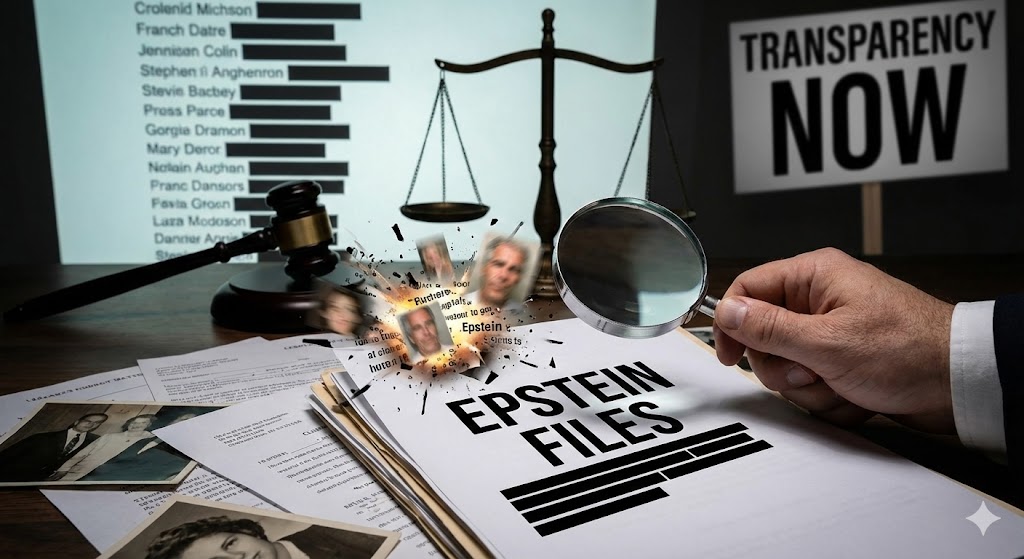
The long-awaited release of the Epstein Files has finally landed—and it’s messy, controversial, and far from complete. As the US Department of Justice drops the first batch of documents linked to Jeffrey Epstein, the public is getting a glimpse into decades-old photos, court filings, and testimonies involving some of the most powerful people on the planet. From images of Bill Clinton to references involving Donald Trump, the files raise uncomfortable questions—while answering very few. Heavy redactions, political finger-pointing, and hundreds of thousands of unreleased pages mean one thing: this story is just getting started.
What the Epstein Files Actually Contain—and What’s Still Hidden
The first batch of the Epstein Files is a classic case of information overload with strategic silence. On paper, the release by the United States Department of Justice looks massive—thousands of pages, photos, videos, FBI notes, police statements, and court filings tied to Jeffrey Epstein and his long criminal history. But once you dig in, the reality hits: what’s visible is only a fraction, and what’s missing matters way more.
What’s Actually in the Files
The released documents fall into a few broad buckets:
- Photographs and videos dating back to the 1990s and early 2000s, many showing Epstein with politicians, celebrities, and business elites. These images have driven headlines—but context is often missing.
- Investigative reports from federal and local law enforcement, including material linked to the Federal Bureau of Investigation.
- Civil court filings, especially lawsuits against Epstein’s estate and his longtime associate Ghislaine Maxwell.
- Victim statements and early complaints, some dating back nearly three decades, documenting patterns of grooming, coercion, and intimidation.
Crucially, the presence of a name, photo, or reference does not imply guilt. The files themselves repeatedly stress this, and many individuals named have either denied wrongdoing or were never accused in the first place. This is raw material—not verdicts.
The Redaction Problem
Now the uncomfortable part. A huge percentage of the documents are heavily redacted—entire pages blacked out, names removed, timelines chopped up. One grand jury-related file reportedly contains over 100 pages with zero readable content. Legally, redactions are allowed to:
- Protect victims’ identities
- Shield ongoing investigations
- Avoid exposing sensitive law enforcement methods
But here’s the catch: the law also requires the DOJ to explain why each redaction exists. That explanation hasn’t been fully provided yet. And that’s why critics—across party lines—are calling this a compliance failure, not transparency.
What’s Still Hidden
According to the DOJ itself, several hundred thousand pages remain unreleased and are still under review. These are expected to include:
- More detailed financial records
- Deeper communication logs
- Expanded witness statements
- Additional photos and videos
- Internal DOJ and prosecutorial assessments
Translation? The most revealing connective tissue—the “who knew what, and when”—is likely still locked away.
Why This Matters
This isn’t just about Epstein anymore. It’s about institutional accountability. Congress passed the release law precisely because past investigations failed victims and allowed powerful networks to stay untouched. When transparency laws are met with delays, mass redactions, and vague explanations, public trust takes another hit.
Bill Clinton, Trump, and High-Profile Mentions: Guilt, Optics, and Legal Reality
Let’s get one thing straight—names in files are not convictions. But in the Epstein Files, optics hit harder than facts, and that’s exactly why the mentions of Bill Clinton and Donald Trump have turned this document dump into political napalm.
Bill Clinton: Images, Associations, and the Burden of Optics
The files include multiple photographs of Clinton from the 1990s and early 2000s—some casual, some uncomfortable-looking by today’s standards. Poolside shots. A hot tub image. Group settings with Epstein nearby. None of this is new, but releasing them now reignites the narrative.
Legally speaking, Clinton has never been accused by Epstein’s victims. No lawsuit names him. No criminal complaint implicates him. His team maintains that he cut ties with Jeffrey Epstein before Epstein’s crimes became public—and there’s no document in this release that directly contradicts that claim.
But politics isn’t a courtroom. In the public eye, repeated proximity to Epstein creates suspicion, even when no evidence of wrongdoing exists. That’s the curse of elite circles: association becomes implication, whether fair or not.
Donald Trump: Mentions Without Allegations
Trump’s presence in the files is actually limited—despite the noise. His name appears in contact materials and in a civil filing describing an alleged encounter at Mar-a-Lago involving Epstein and a minor. Here’s the key point most hot takes skip: the alleged victim made no accusations against Trump.
The document states she felt uncomfortable during the interaction, but it stops short—very deliberately—of alleging misconduct by Trump. From a legal standpoint, that distinction is everything.
Trump has long acknowledged knowing Epstein socially and claims they fell out around 2004, years before Epstein’s first arrest. No criminal charge, no civil liability, no sworn accusation ties Trump to Epstein’s crimes based on the current record.
Guilt vs. Optics: Why This Gets Weaponized
This is where the Epstein Files become less about justice and more about narrative warfare. Campaign accounts, party operatives, and social media ecosystems immediately cherry-picked images and names—not to inform, but to score points.
Both Clinton and Trump are victims of the same brutal truth:
When power, fame, and Epstein intersect, optics become explosive, even when evidence stays thin.
The Legal Reality
Courts operate on proof, not vibes. And right now:
- No charges have emerged against Clinton or Trump from these files
- No victim testimony directly accuses either man
- No prosecutor has indicated imminent action
That doesn’t mean accountability conversations are invalid—but it does mean accusations must stay grounded in evidence, not insinuation.
Why This Section Matters
The Epstein case exposed a system that protected predators while failing victims. Turning it into a partisan blame game risks repeating that failure. Justice isn’t served by scapegoats—it’s served by facts, transparency, and follow-through.
Celebrities, Royals, and Power Circles: How Epstein Built Elite Access
Jeffrey Epstein didn’t survive for decades because he hid in the shadows—he survived because he stood in the spotlight with the right people. His greatest weapon wasn’t money or manipulation alone; it was elite access. The newly released Epstein Files make this painfully clear by showing just how deep his connections ran across entertainment, royalty, politics, and high society.
The Strategy: Prestige as Protection
Epstein understood an old-world truth: status creates silence. By surrounding himself with influential figures, he constructed an aura of legitimacy that discouraged scrutiny. When people saw him alongside Nobel-winning scientists, global celebrities, or royalty, alarms simply didn’t go off. Power validated him.
His parties weren’t random social gatherings—they were curated ecosystems. Celebrities brought glamour. Politicians brought influence. Royalty brought untouchability. And Epstein positioned himself at the center, not as a host, but as a connector.
Royals and the Ultimate Shield
No association illustrates this better than Prince Andrew. Photographs and testimonies linking the British royal to Epstein have been circulating for years, but the files reinforce just how normalised that relationship once was. Epstein didn’t need Andrew to commit a crime—he needed him to exist nearby. A royal presence alone sent a message: this man is safe.
Standing close by in many of these circles was Ghislaine Maxwell, the social operator who translated Epstein’s wealth into entrée. She opened doors that money alone couldn’t, introducing him into aristocratic and political spaces where background checks were replaced by reputation.
Hollywood, Music, and Cultural Capital
The Epstein Files also include images featuring major entertainment figures—among them Michael Jackson, Mick Jagger, Diana Ross, and actor Chris Tucker. Again, context is thin, dates are unclear, and no wrongdoing is alleged. But that’s not the point.
In elite ecosystems, association equals insulation. When Epstein appeared in photos with cultural icons, it blurred lines. Was he a financier? A patron? A friend? That ambiguity worked in his favor. People assume monsters look like monsters. Epstein looked like a man who belonged.
The Science and Philanthropy Angle
Beyond glamour, Epstein embedded himself in intellectual circles—funding research, attending academic events, and mingling with scientists. This created a moral camouflage. Philanthropy has always been a reputational shield, and Epstein used it expertly to frame himself as a benefactor rather than a predator.
Why This Network Matters
The files don’t prove that celebrities or royals were complicit—but they expose a systemic failure. Epstein didn’t operate alone; he operated within a culture that confuses proximity to power with credibility. Institutions deferred. Media hesitated. Law enforcement slowed down.
This is the real lesson of elite access: when everyone assumes someone else has vetted you, no one actually does.
Epstein didn’t just exploit victims—he exploited a class structure that protects its own.
Victims’ Voices and Chilling Allegations: What the Files Reveal About Abuse
Strip away the celebrity names, the politics, the redactions—and what’s left in the Epstein Files is devastating. At the core of these documents are victims who tried to speak, often years or decades ago, and were ignored, dismissed, or quietly buried under power and paperwork.
Early Warnings That Went Nowhere
One of the most haunting revelations comes from Maria Farmer, among the earliest known whistleblowers. As far back as 1996, she reported Epstein to the Federal Bureau of Investigation, alleging sexual assault and detailing how Epstein possessed stolen photographs of her underage sisters.
Her FBI complaint, now partially visible in the files, describes a pattern that would later become tragically familiar: grooming, intimidation, exploitation, and threats. Farmer stated that Epstein warned he would burn down her house if she spoke publicly. That threat appears in black and white in the documents.
This wasn’t rumor. This wasn’t hindsight. This was a clear alarm—ignored.
A Pattern, Not Isolated Crimes
Victim statements across the files show striking consistency. Young girls—often from vulnerable backgrounds—were recruited under the guise of “massage work,” slowly groomed, then coerced into sexual acts. Some were trafficked across state lines. Others were photographed, creating leverage that locked them into silence.
What makes these revelations harder to stomach is not just the abuse—but the institutional failure that followed. Reports were filed. Names were given. Evidence was described. And still, Jeffrey Epstein continued operating freely for years.
Ghislaine Maxwell’s Central Role
The files also reinforce the role of Ghislaine Maxwell as more than an accessory. Victims repeatedly describe her as a recruiter, gatekeeper, and enforcer—someone who normalized abuse and ensured compliance.
Her conviction in 2021 gave some measure of accountability, but the documents suggest her actions were long known—or at least suspected—by people with the power to intervene earlier. That intervention never came.
The Cost of Silence
Many victims describe not just physical abuse, but long-term psychological damage: shame, fear, distrust of authority, and a deep belief that speaking out was pointless. And honestly? The system proved them right for far too long.
Some names in the files remain redacted to protect survivors. That protection matters—but it also underscores how long anonymity has been their only shield, while Epstein’s network operated in plain sight.
Why This Is the Most Important Part of the Files
The Epstein Files are often framed as a scandal about who knew whom. That framing is wrong. This is a story about who was ignored.
The victims weren’t silent. They were silenced—by bureaucracy, by intimidation, and by a culture that prioritised reputations over children.
If these documents lead to anything meaningful, it shouldn’t be viral photos or partisan outrage. It should be systemic reform: faster investigations, real consequences for negligence, and a justice system that listens the first time.
Because the most chilling truth in these files isn’t what Epstein did.
It’s how many chances there were to stop him—and how many were wasted.
The Politics of Delay: DOJ, Congress, and the Battle Over the Remaining Files
If the Epstein scandal has a second villain after Jeffrey Epstein himself, it’s delay. The abuse happened in the shadows—but the aftermath is playing out in broad daylight, with the United States Department of Justice and Congress locked in a slow-motion power struggle over what the public gets to see and when.
The Law vs. The Rollout
Congress didn’t request transparency—it mandated it. The Epstein Files Transparency Act was passed to force the DOJ to release all non-protected Epstein-related records by a fixed deadline. That deadline has now come and gone, and what the public received was only a partial dump—thousands of pages, yes, but nowhere near complete.
The DOJ argues the delay is necessary. Officials claim they are balancing transparency with victim protection and ongoing investigative sensitivities. On paper, that sounds reasonable. In practice, it’s raised eyebrows—because the law already accounted for redactions with explanations. Those explanations are largely missing.
That’s the core issue: compliance, not caution.
“Hundreds of Thousands” Still Hidden
Deputy Attorney General Todd Blanche admitted publicly that several hundred thousand pages remain under review, with more to be released “in the coming weeks.” That phrase—coming weeks—has become political gasoline.
Why? Because Epstein-related delays aren’t new. Survivors reported abuse in the 1990s. Prosecutions stalled. Plea deals softened consequences. Now, even disclosure is crawling forward. The pattern feels familiar—and deeply uncomfortable.
Bipartisan Frustration Boils Over
What’s different this time is bipartisan anger. This isn’t a left-vs-right food fight. Lawmakers from both parties are openly accusing the DOJ of stonewalling.
Congressman Ro Khanna, a Democrat, has threatened serious action—ranging from subpoenas to impeachment—arguing that the DOJ’s release failed to meet legal standards. Standing beside him is Republican Congressman Thomas Massie, who co-led the push to force the transparency vote in the first place.
That alliance matters. When ideological opposites agree something’s wrong, it usually is.
Why Delay Is a Political Strategy
Let’s be blunt: delay protects institutions. Releasing everything at once creates shockwaves—legal, political, reputational. Slow release does the opposite. It fragments attention, dulls outrage, and buys time for damage control.
This isn’t conspiracy talk. It’s bureaucratic instinct. Governments everywhere prefer controlled disclosure over uncontrolled truth. Epstein’s case just makes that instinct impossible to ignore.
What’s Really at Stake
This fight isn’t about embarrassing photos or headline names anymore. It’s about whether the justice system answers to the law—or hides behind procedure.
If the remaining files are released fully and honestly, they could expose:
- How early warnings were handled
- Who failed to act—and why
- Whether negligence crossed into complicity
If they aren’t, the Epstein case risks becoming a textbook example of elite accountability almost happening—and then quietly fading away.
The Endgame
Transparency delayed is trust denied. And after decades of failure, the public isn’t buying patience as an excuse anymore.
The Epstein Files were supposed to close a chapter. Instead, they’ve opened a new one—where the real trial isn’t Epstein’s crimes, but the system’s willingness to confront them without fear or favor.
That’s the real battle now. And it’s far from over.
The stakes are higher than any single document drop. Every day the remaining files stay sealed, skepticism grows—about motives, about selective transparency, and about whether justice is being timed to political convenience. Survivors waited decades to be heard; asking them to wait longer for “process” feels like history repeating itself. If the government wants credibility, it must finish what the law started: full disclosure, clear redaction justifications, and zero ambiguity. Anything less will confirm the darkest suspicion surrounding the Epstein case—that power doesn’t just enable abuse, it controls the truth afterward too.
About The Author










Leave a Reply