

Table of Contents
India groundwater crisis is no longer a future warning—it’s unfolding in real time beneath our feet. From tankers ruling city streets to dry borewells crippling villages, groundwater depletion has become a slow-moving national emergency. Despite floods in some regions, large parts of the country are edging closer to ‘Day Zero’—the moment when taps run dry. Rising demand, reckless extraction, climate stress, and weak regulation have pushed India’s invisible lifeline to the brink. Identifying the most vulnerable states and understanding why the crisis is accelerating is now essential for policy, planning, and survival.
What ‘Day Zero’ Means in the India Groundwater Crisis
‘Day Zero’ sounds dramatic—and honestly, it should. It’s the point where a city or region officially runs out of usable water. No flowing taps. No regular supply. Water becomes a rationed commodity, delivered by tankers, guarded by police, and fought over by residents. This isn’t some dystopian Netflix plot. India has already tasted it—and parts of the country are edging dangerously close to a repeat.
The most famous Indian example is Chennai. In June 2019, all four major reservoirs supplying the city dried up. Households depended on tanker water, offices shut down, restaurants closed, and daily life turned into a logistical nightmare. That was Day Zero in action. Not famine, not drought headlines—just the quiet collapse of urban water systems.
What makes Day Zero especially dangerous is that it doesn’t arrive with sirens. It creeps in. First, borewells fail. Then tanker prices spike. After that, water cuts become routine. By the time authorities admit a crisis, the aquifers are already exhausted. Groundwater, which acts as India’s emergency backup, gets over-pumped precisely when it should be protected.
India’s proximity to Day Zero is rooted in simple math—and brutal reality. The country supports nearly 17% of the world’s population but has access to only about 4% of global freshwater resources. Per capita water availability has been falling steadily. Once it dips below 1,000 cubic meters per person per year, a country is officially classified as water-scarce. India is sliding toward that line faster than policy can keep up.
What’s worse is our dependence on groundwater. Around 85% of rural drinking water and nearly half of urban water supply comes from underground sources. These aquifers recharge slowly, unevenly, and depend heavily on monsoons—which are becoming more erratic thanks to climate change. When rainfall fails or comes in short, intense bursts, recharge drops while extraction continues unchecked.
The warning signs are everywhere. Wells that once reached water at 50 feet now need drilling beyond 300 feet. Urban lakes are encroached upon or polluted beyond use. Cropping patterns still favor water-guzzling crops in arid regions. And legally, groundwater remains tied to land ownership, meaning regulation is weak and enforcement weaker.
Institutions like NITI Aayog have already flagged that multiple Indian cities are at risk of exhausting their groundwater reserves. But Day Zero isn’t just an urban problem. In villages, it shows up as women walking farther for water, failed crops, and seasonal migration. Different faces, same crisis.
The uncomfortable truth? India isn’t running out of water overnight. It’s running out of managed water. Day Zero happens not because water vanishes, but because governance, planning, and restraint do. If current extraction patterns continue, Day Zero won’t be a rare event—it’ll become a recurring feature of Indian summers.
This is the alarm bell section of the story. Next, we need to understand what’s actually happening underground—because the real crisis isn’t visible on the surface.
Groundwater and the India Groundwater Crisis: The Invisible Backbone
If India’s water system were a body, groundwater would be its spine—quiet, load-bearing, and taken for granted until it starts cracking. Rivers get the headlines, dams get the ribbon cuttings, but groundwater is what actually keeps the country running. It irrigates fields, fills taps, and rescues cities every summer when surface water fails. And right now, this invisible backbone is under extreme stress.
Groundwater supplies around two-thirds of irrigation needs, nearly all rural drinking water, and almost half of urban water demand. In plain terms: if groundwater collapses, India’s food security, public health, and urban life collapse with it. That’s not alarmism—that’s arithmetic.
According to assessments cited by NITI Aayog, India is the largest extractor of groundwater in the world, accounting for over a quarter of global extraction. This didn’t happen overnight. It’s the result of decades of policy choices—cheap electricity for agriculture, promotion of water-intensive crops, and almost zero regulation on who can extract how much water from below the ground.
Here’s the core problem: groundwater is slow money, but we’re spending it like fast cash. Aquifers recharge gradually through rainfall, soil absorption, and natural drainage. But extraction—through borewells, tube wells, and pumps—has exploded. In many regions, water is being pulled out faster than nature can put it back. That’s not use; that’s mining.
The data from Central Ground Water Board paints a worrying picture. A significant share of India’s groundwater assessment units are now classified as semi-critical, critical, or over-exploited. In states like Punjab, Rajasthan, Haryana, and Delhi, extraction exceeds recharge by massive margins. Once an aquifer hits that stage, recovery can take decades—if it happens at all.
Urban India often assumes groundwater is a rural issue. Big mistake. Cities increasingly rely on private borewells as municipal supply falls short. Apartment complexes drill deeper every year. Industries pump silently below factory floors. The result? Falling water tables, land subsidence risks, and contamination as deeper, poorer-quality water gets mixed into supply.
And contamination is the silent side-quest no one likes to talk about. Over-extraction pulls in arsenic, fluoride, salinity, and industrial pollutants. India ranks disturbingly low on global water quality indices. So even where groundwater exists, it’s often unsafe—turning scarcity into a health crisis.
Legally, the situation is stuck in the 19th century. Groundwater rights are still linked to land ownership, meaning if you own land, you can extract as much water as you want beneath it. No meters. No caps. No accountability. Add fragmented governance—different agencies handling surface water, groundwater, urban supply, and irrigation—and you get policy chaos.
The irony? Groundwater saved India for decades. During droughts, weak monsoons, and growing population pressure, it acted as a shock absorber. But that buffer is thinning fast. What was once a resilience asset is now a vulnerability.
Bottom line: you can’t manage what you don’t see—and India has treated groundwater as invisible for far too long. If Day Zero is the symptom, groundwater collapse is the disease.
India Groundwater Crisis Hotspots: Punjab, Rajasthan, Delhi, and the South
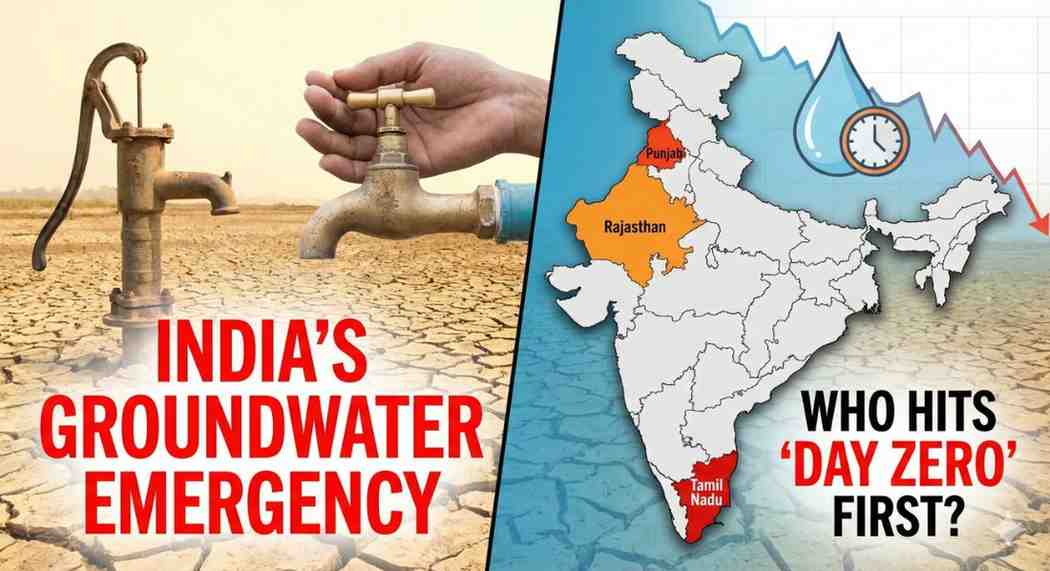
If India’s groundwater crisis had a map, the danger zones would light up fast—and bright. While the national average still gives a misleading sense of “manageable stress,” state-level data tells a far harsher story. Punjab, Rajasthan, Delhi, and large parts of southern India are no longer just vulnerable; they are operating on borrowed time.
Punjab sits at the top of the danger list, and the irony is brutal. Once celebrated as the engine of the Green Revolution, the state is now paying the ecological price of that success. Groundwater extraction here exceeds annual recharge by more than one-and-a-half times. Free or near-free electricity, combined with water-intensive paddy cultivation, has encouraged relentless pumping. Water tables in several districts are falling by over a meter every year. Farmers drill deeper, costs rise, and aquifers slip further out of reach. This is a classic case of food security policy colliding head-on with water security reality.
Rajasthan faces a different, but equally alarming, trap. Large parts of the state are arid by nature, with low rainfall and limited natural recharge. Groundwater here was always fragile—but rising population, agriculture expansion, and urban demand have pushed it to the brink. Extraction levels far exceed sustainable limits, especially in eastern and central Rajasthan. Once these hard-rock aquifers dry up, they don’t bounce back easily. In many villages, wells are already abandoned, forcing dependence on tankers and long-distance water transfers.
Then there’s Delhi, the capital that shouldn’t be thirsty—but is. Officially, the city falls into the “critical” category for groundwater extraction. Unofficially, it’s worse. Unauthorized borewells dot residential colonies, commercial hubs, and construction sites. Recharge zones have been paved over, lakes encroached, and floodplains exploited. Delhi’s dependence on groundwater spikes every summer when surface supply from the Yamuna and neighboring states becomes politically and hydrologically strained. Day Zero here wouldn’t just be a water issue—it would be a governance meltdown.
The southern hotspots—Tamil Nadu, Karnataka, Telangana, and Andhra Pradesh—add another layer of complexity. These states depend on hard, crystalline aquifers with low storage capacity. In simple terms: they don’t hold much water to begin with. Once depleted, recovery is painfully slow. Cities like Chennai and Bengaluru have already shown what urban groundwater collapse looks like—dry reservoirs, tanker mafias, water bans, and public unrest. Rural areas face crop failures and seasonal migration, turning water scarcity into a livelihood crisis.
What ties these regions together isn’t geography—it’s policy failure. Cropping choices ignore ecological limits. Urban planning treats groundwater as infinite. Regulation exists on paper but vanishes underground. And climate change is pouring fuel on the fire through erratic monsoons and rising temperatures.
The scary part? These are not outliers. They are trendsetters. What’s happening in Punjab, Rajasthan, Delhi, and the southern states today is a preview of what other regions could face tomorrow.
This is the “where” of India’s groundwater crisis. Next comes the harder question—the “why.”
Why the India Groundwater Crisis Is Worsening From Farms to Cities?
Let’s be blunt—India isn’t running out of water because of bad luck. It’s running out because of bad choices, repeated for decades, and now amplified by climate change. The crisis stretches from farm fields in rural belts to concrete-heavy cities, and every link in the chain leaks water, accountability, or both.
Start with agriculture, the elephant in the room. Nearly 90% of India’s groundwater extraction goes into farming. That might sound justified—after all, food security matters. But the problem isn’t farming itself; it’s what and where we grow. Paddy in Punjab and Haryana, sugarcane in Maharashtra, and water-heavy crops in arid or semi-arid regions defy basic ecological logic. Subsidised electricity and assured procurement have locked farmers into these patterns. The pump runs because it’s cheap, not because water is abundant. Over time, aquifers empty, yields stagnate, and farmers get trapped in a deeper-cost cycle.
Then comes urban sprawl, the quiet water killer. Indian cities have grown fast, messy, and largely unplanned. Lakes that once acted as recharge zones have been encroached, polluted, or converted into real estate. Floodplains—nature’s sponges—are paved over. Rainwater that should seep underground is instead flushed away through drains. When municipal supply falls short, cities don’t slow down—they drill down. Borewells multiply, water tables fall, and groundwater becomes the default emergency source rather than a protected reserve.
Climate change is the accelerant. India still depends heavily on the monsoon, but the monsoon is no longer predictable. Rainfall now comes in short, intense bursts instead of slow, soaking showers. That means floods on the surface and poor recharge underground. Heatwaves increase evaporation, pushing water demand higher just when supply is most fragile. Droughts and floods now coexist in the same year—sometimes in the same state.
Add pollution to the mix, and the crisis deepens. Industrial effluents, untreated sewage, mining waste, and agricultural chemicals seep into groundwater. Once contaminated, aquifers are extremely hard—and expensive—to clean. So even where water exists, it’s often unsafe for drinking. Scarcity isn’t just about quantity anymore; it’s about quality.
The legal and governance framework doesn’t help. Groundwater is still governed by outdated principles that link water ownership to land ownership. There are caps on paper, but enforcement is weak. Multiple agencies manage different pieces of the water puzzle—rivers, groundwater, irrigation, urban supply—without real coordination. The result is fragmented management and zero long-term planning.
Finally, there’s public behavior. Water is treated as free, limitless, and someone else’s problem. Tankers normalize scarcity instead of solving it. Conservation kicks in only during crisis months, then disappears with the first good monsoon.
Put it all together and the picture is clear: India’s water crisis isn’t natural—it’s structural. It’s the cumulative outcome of policy blind spots, short-term incentives, and ignoring ecological limits.
So if this is the “why,” the next—and final—question is unavoidable: what is being done, and is it enough?
Government Response to the India Groundwater Crisis: Can India Still Recover?
Short answer? Yes—but only if India stops treating groundwater like an emergency fire drill and starts managing it like a national asset. The government isn’t asleep at the wheel; several initiatives are on the table. The real problem is the gap between policy intent and on-ground execution.
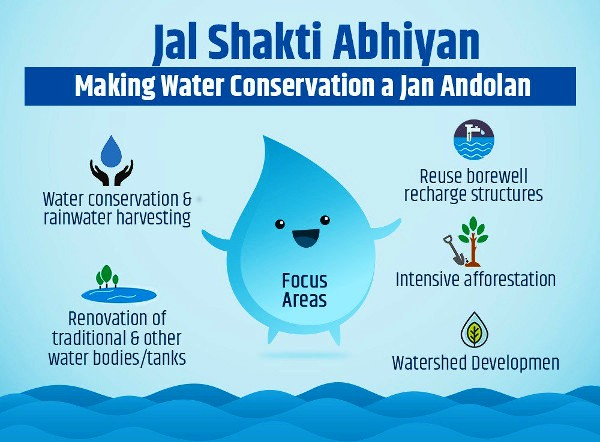
On the policy front, the big push came with the Jal Shakti Abhiyan, launched to shift focus from crisis response to conservation—rainwater harvesting, recharge structures, and revival of traditional water bodies. It’s conceptually solid and culturally rooted. Where districts took it seriously, results showed up. Where it became a checkbox exercise, not so much.
Then there’s Atal Bhujal Yojana, arguably the most promising intervention so far. It flips the script by putting communities at the center of groundwater management. Villages map aquifers, track usage, and decide extraction norms themselves. Early results from pilot states suggest something powerful: when users understand limits, overuse drops. This is old-school wisdom meeting modern data—and it works. The catch? Scale. India needs this approach everywhere, not just in select blocks.
Urban India is being tackled through AMRUT 2.0, which emphasizes water reuse, stormwater management, and rainwater harvesting. Again, strong design. Weak enforcement. Many cities still approve buildings without functional recharge systems. Lakes get “beautified” but not hydrologically restored. Pipes leak more water than some towns consume.
For drinking water access, the Jal Jeevan Mission deserves credit. Millions of households now have tap connections. But here’s the uncomfortable truth: access without sustainability is risky. If groundwater sources dry up, pipes don’t matter. Source sustainability needs to move from footnote to headline.
Monitoring has improved with the Central Ground Water Board rolling out GIS-based platforms to track extraction and recharge. Data transparency is better than ever. But data without regulation is just information—not control. Metering of borewells, extraction caps, and penalties remain politically sensitive and unevenly enforced.
So where does ground reality diverge? In incentives. Farmers still get signals to grow thirsty crops. Cities still expand without respecting recharge zones. Tanker economies still profit from scarcity. And groundwater laws remain stuck in colonial logic that ties water rights to land ownership.
Can India reverse the slide? Yes—but only with hard choices. Crop diversification backed by procurement reform. Mandatory groundwater budgeting at local levels. Strict protection of floodplains and lakes. Universal rainwater harvesting that actually works. And most importantly, treating groundwater as a shared resource—not private property.
The old way—extract now, worry later—is done. Groundwater doesn’t negotiate. Either India manages it collectively, or Day Zero manages India.
About The Author









Leave a Reply